
In our last 2 posts we explored the concept of empathy, why it is important for leaders, and how to invite empathy into your interactions. In part 3 of our empathy series, we will describe how to practice empathy on the back end of interactions by deconstructing your conversations.
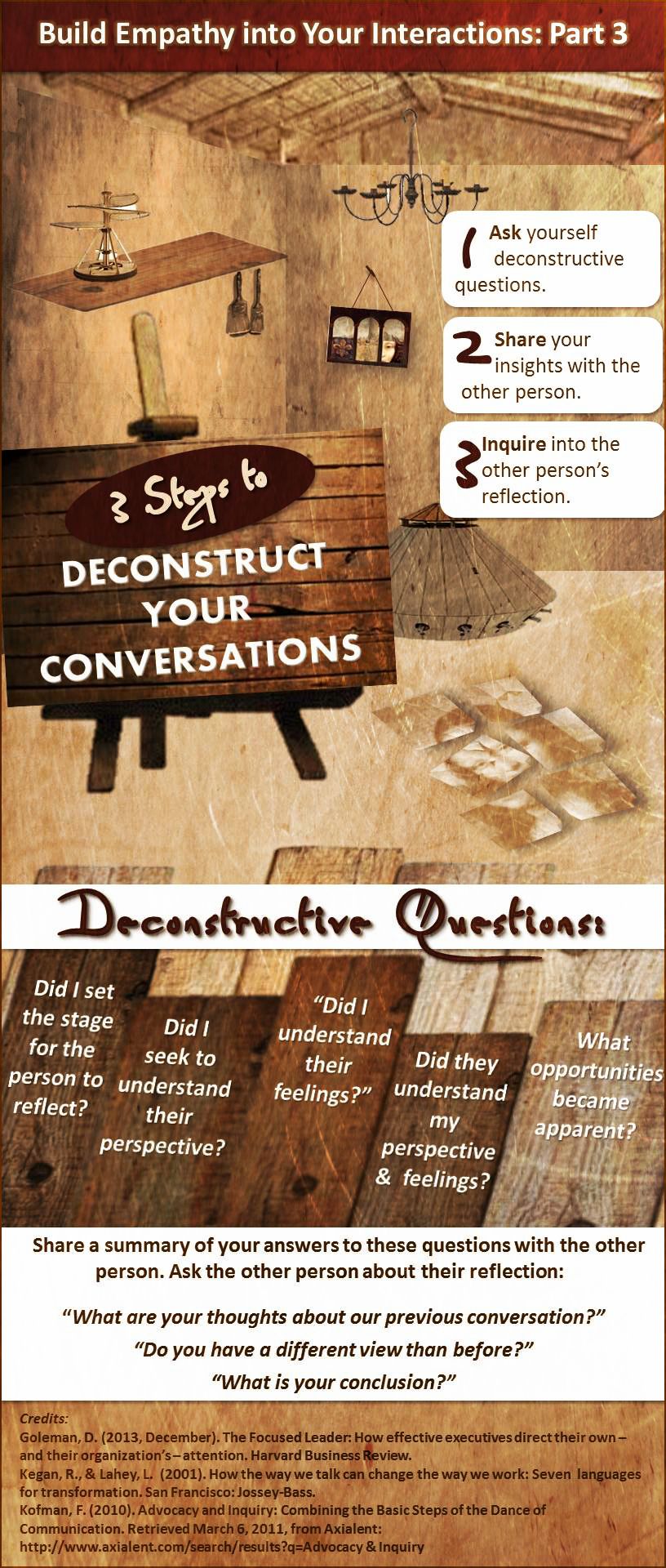
Even if you are intentional about building empathy into your interactions, it may not truly blossom in the moment. Critical conversations need to be deconstructed. Once you step aside and ask yourself deconstructive questions, you may uncover more feelings and perspectives from the other person that need to be acknowledged. Deconstructing goes beyond ‘reflecting on’ or ‘evaluating’ a conversation: it provides you with rich data and direction on how to proceed in your follow-up conversation. For example, you can say, “I heard where you are coming from… I appreciate… I see an opportunity to…”
If you deconstruct your conversations, then you will deepen your relationships.
Use the following deconstructive questions to ask yourself, “Did I practice empathy? Did others understand me?”
Did I set the stage for the person to reflect?
Did we schedule a follow-up conversation?
Did I seek to understand the other person’s perspective?
Did I understand what the other person was feeling?
Did the other person understand my perspective and feelings?
What opportunities became apparent?
Write your answers to each of the deconstructive questions. Have new perspectives or insights emerged? Share a summary of your answers with the other person then inquire about their thoughts:
“How do you feel about the previous conversation?”
“Do you have a different view than before?”
“What is your conclusion?”
Questions to Deepen Thinking
What would listening deeply to others get you?
How is sharing your perspective with others working for you?
What could happen if you don’t deconstruct your conversations?
Credits
Kegan, R., & Lahey, L. (2001). How the way we talk can change the way we work: Seven languages for transformation. San Francisco: Jossey-Bass.
Kofman, F. (2010). Advocacy and Inquiry: Combining the basic steps of the dance of communication. Retrieved March 6, 2011, from Axialent.com.
Related Posts
Build Empathy into Your Interactions Part 1
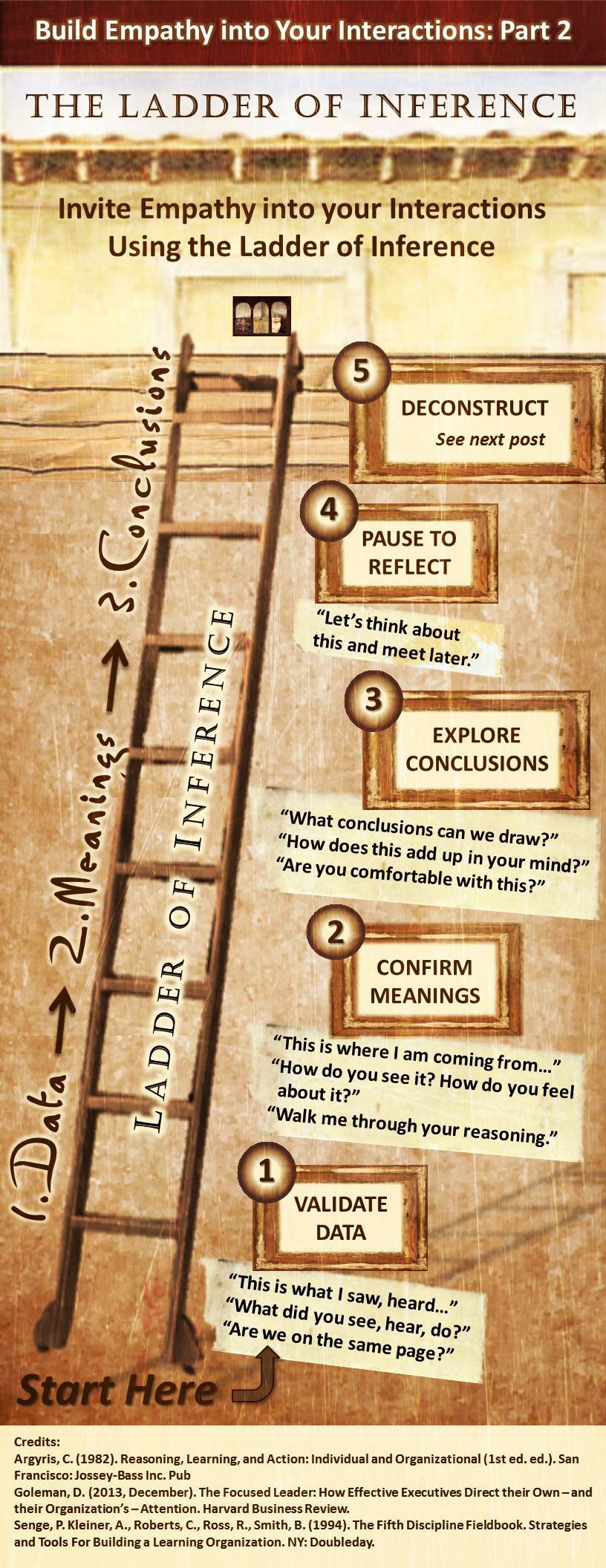
Build Empathy into Your Interactions Part 2: Climbing the Ladder of Inference



 Masterpiece Leader Blog